How I Use AI in Legacy Films (and How I Don't)
There's a lot of talk right now about what AI can do with our memories. It can animate old photographs, it can put words into people's mouths and create interactive bots, and it can even create holograms of people who have passed.
And to be honest: I find a lot of that quite creepy.
It's not how I use AI in my work at all.
But when I was recently asked to create an Ancestry Film with barely any available photos, it prompted me to use AI in a way that brought a whole new, wonderful dimension of the story to life.
What our films are really about
At Big Stories Little Films, our work is about capturing moments while people are still here to share them. We sit down with someone, mindfully and with care, and give them the space to tell their story in their own words.
That's the whole point. The personality, the humanity, the pauses, the laughter, the way a person's face changes when they talk about someone they loved. None of that can be invented, and none of it should be.
So when I use AI, it's never to replace a person or speak for them. It's to support the story they've chosen to tell.
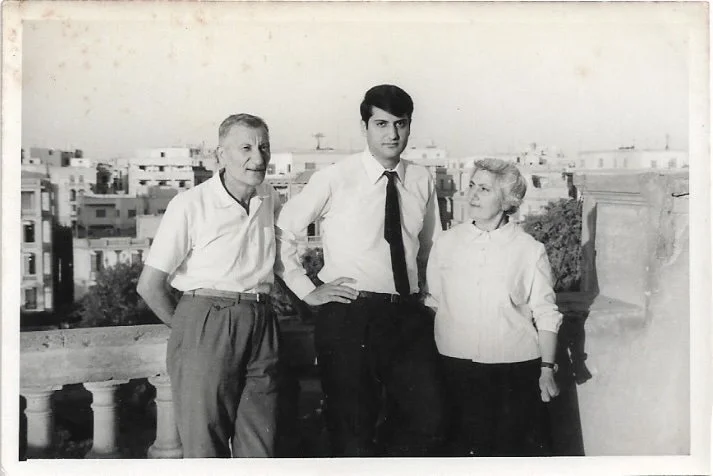
Shavarsh Bedrossian, with his parents who survived the Armenian Genocide.
Filling the gaps: Shavarsh's story
A few months ago, Shavarsh Bedrossian came to me wanting to record his family’s story. They were orphaned in the Armenian genocide and fled their homes with only the clothes on their backs. There are no photographs of them as children. The first pictures of them weren't taken until they were teenagers.
In most of our films, family photos play a huge role in bringing the story told in the interview to life. Here, there was nothing to cut to. What there was, though, was Shavarsh's story, and his parents stories, and they were incredibly vivid, and important.
So, to bring his words in his interview to life, I had the idea to use AI to create illustrations of his parents' journeys, using maps showing their journey routes through desserts and across seas, chronicalling their journey’s key moments. Together, the AI animations couples with the interview, rebuilt a chapter of the family's history that had never been seen.
The result is a really beautiful film, deeply human film.
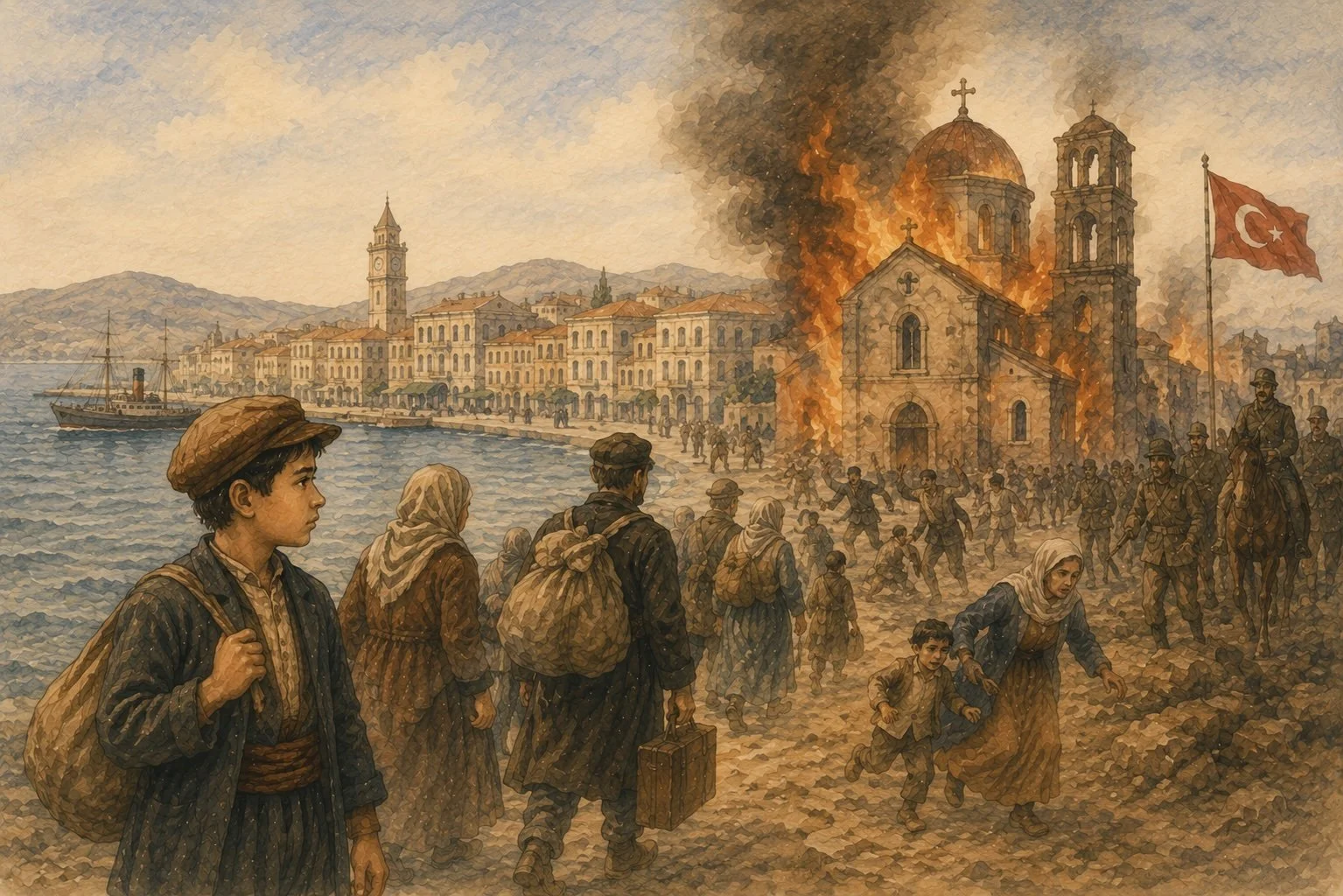
An AI generation illustration from Shavarsh’s Family Ancestry film.
AI as a tool for the story, not a substitute for it
To me, this is the best possible use of AI. It doesn't invent anyone's memories or put words in anyone's mouth. It fills the gaps in a real story, told by a real person, so it can be seen as vividly as it's remembered and shared with the people who matter most.
Every person is different, so every one of our films is too. Sometimes that means old photographs and home movies. Sometimes it means going back to the places where it all happened. And sometimes, when the pictures simply don't exist, it means finding new ways to show a story that deserves to be seen.
Shavarsh has generously given permission to share his entire Family Ancestry film, and can be enjoyed by clicking the link below.
If there's a story in your family with gaps like this, I'd love to talk about how we could tell it. Please, get in touch, I’d love to hear from you.